Categories
Production

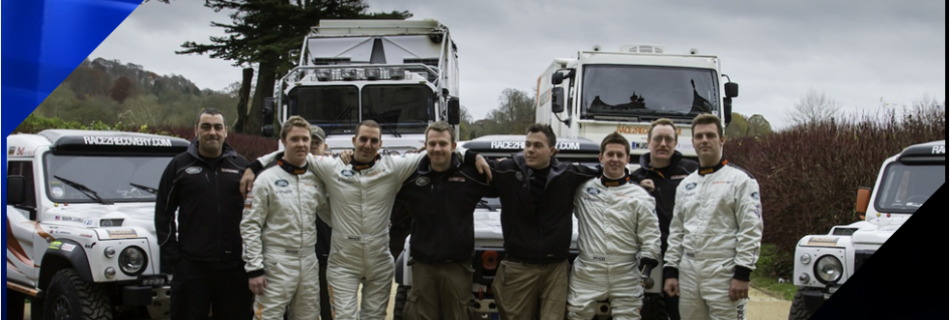
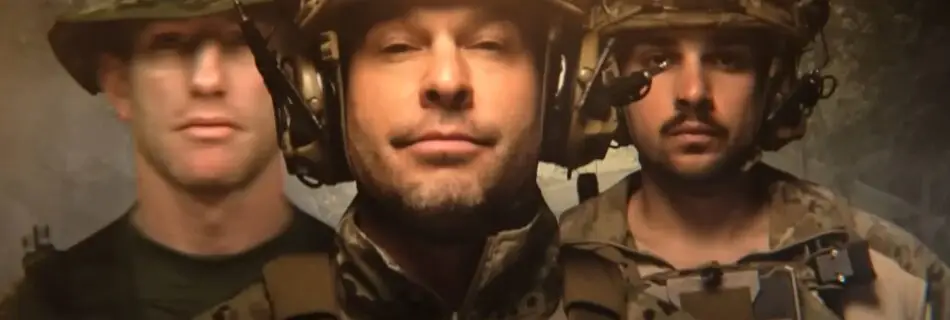
TOUGHEST FORCES ON EARTH – now streaming on Netflix

Three adventurous veterans train alongside some of the world’s most elite military units, getting an inside look at their tactics and weaponry. Watch on Netflix

Categories
Production

Ross Kemp: Shipwreck Treasure Hunter

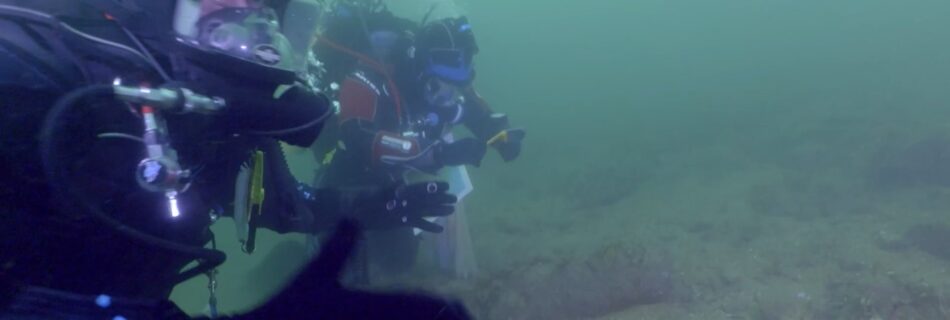
Journalist and Series Host Ross Kemp fulfills a life-long dream to dive beneath the ocean’s surface and explore underwater shipwrecks along the British coastline to reveal their secrets, and possibly recover long-lost treasure.

Categories
Production

World’s Busiest Train Stations – Channel 5 and now streaming Quintus Media/YouTube


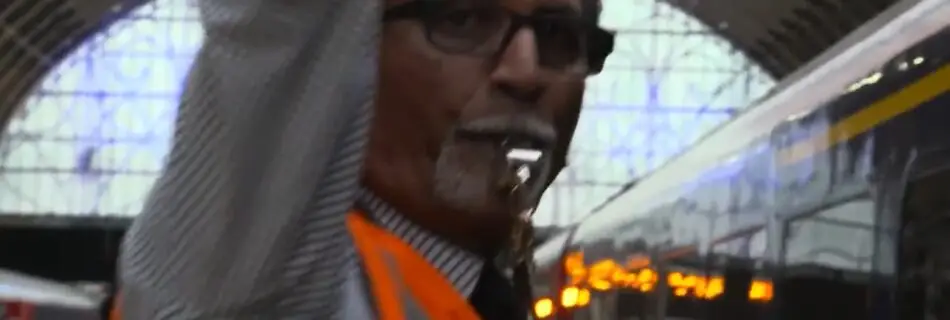
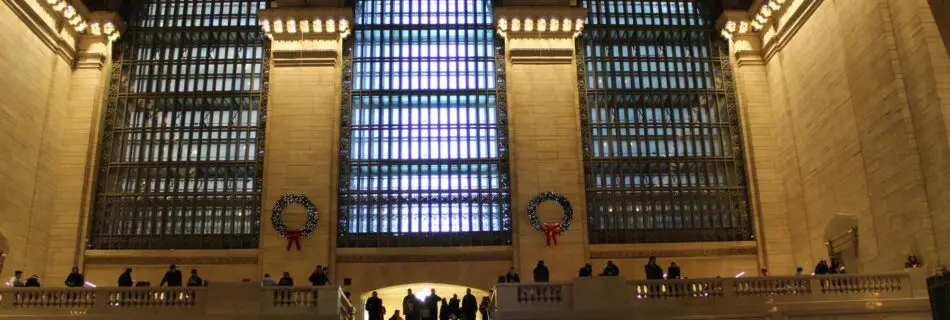
With unprecedented behind-the-scenes access this series buys a unique first-class ticket to the secret life of the world’s most iconic train stations, following station staff, train drivers, track maintenance crews and transport police as they battle through human drama, travel disruption and engineering challenges to keep trains on time and passengers on track.

The World’s Busiest Stations are places of noise, colour and stunning architecture, but they are also symbols of their respective countries and windows into unique cultures, histories and the lives of those who pass through.


Click below to listen to Tim talk to the BBC about World’s Busiest Train Stations

Categories
Production

Paddington Station 24/7


Paddington Station 24/7 is a British documentary television series that aired for four seasons on Channel 5. With exclusive access it goes behind the scenes to reveal the daily drama of life at one of the UK’s busiest and most iconic train stations.
 

Categories
Production

Black Market Britain/Undercover Benefits Cheat/Sham Wedding Crashers

Undercover investigations for Channel 5 into Britain’s criminal networks and the mafias who run them. Read about the sham marriage episode and watch the video on the Mail Online.

Categories
Production

How Facebook Changed the World: The Arab Spring – Part 2

Mishal Husain reports on how the internet and social media were used during the recent revolutions across the Arab world. Travelling back to the region, she meets people who helped spread the revolt from Libya to Bahrain and those still fighting to topple the Syrian regime.


Categories
Production

StreetKids United

StreetKids United – official selection at the Berlinale , UK cinema release: Lexi London, Bath Little Theatre Cinema, Norwich  Cinema City, Oxford Phoenix, Canterbury Cinema
Directed by Tim Pritchard

“Up-lifting and empowering; if you are looking for a genuine feel-good film, start here!” – the Lexi cinema

In 2010, as South Africa geared up for the World Cup, another football tournament was taking place, away from the glare of the media and the attentions of big business. The South African city of Durban played host to the Street Child World Cup bringing together the vulnerable and overlooked – street kids from around the world, in search of a better and brighter future.

StreetKids United follows a group of Durban street children as they compete for places in the South African squad.  It’s  the start of a great adventure that offers them a chance to get away from the abusive and violent life they live on the streets and propel them to better things.

The team’s coach, Biza, will choose a team of nine players. But this is not ‘Strictly…Football’. The players need more than fancy footwork to make it through to the final squad. They need to show their commitment to training and be prepared to turn their backs on the attractions of the street: unfettered freedom, raucous parties and 24 hour access to drugs and alcohol. And that’s a challenge. Their lives at home in the townships are often marked by violence, drug abuse and neglect at the hands of their families and the authorities. For some of them, life on the streets is the lesser of two evils.

There’s euphoria and disappointment as the street kids find out if they have made the team. For those who do, there’s an intense football camp where they train hard, as well as learn the practical and psychological skills they need to survive life off the streets. When the tournament finally comes round they have to face the ups and downs of victory and defeat. But how will it prepare them for life once the glitz and glamour of the tournament is over?
Three months later, on the day of the FIFA World Cup final in South Africa, we find out what has happened to our team of street kids. Has the street child tournament, or the money and attention that the FIFA World Cup brought to South Africa, changed their lives? Did they go back home to their families in the townships, or are they still on the streets living one day at a time?

Categories
Production

Crimesnappers

SHOOTING THE CRIME

The Observer (2003)

Hidden away in an unremarkable tower block in an anonymous part of south London is an extraordinary secret storeroom. Inside, concealed in discreet brown folders and filed along rows upon rows of metal shelves are hundreds of thousands of photographs taken by the Metropolitan Police Photographic Branch. Marked only by a date and a crime number the photos record 100 years of the most infamous and the most humdrum of the capital’s murders, robberies, disasters and riots.

Almost 100 years ago to the day, the Home Office gave the Metropolitan Police a grant of 19 shillings and 10 and a halfpence to buy chemicals and equipment for a fledgling photographic unit. The department’s first camera was confiscated from a prisoner. A year later the first full time police photographer was appointed. His task was to produce “photographs of fugitives from justice, of articles of jewelry, documents, etc. required for use in the Criminal Investigation Department.”

Today, the branch employs 100 civilians, 80 of them professional photographers. Every year they attend some 17,000 crime scenes taking photographs of the aftermath of murder, mayhem and mischief. Their forensic function is a vital one. They record the scene where a crime has taken place so that detectives have a visual account of the incident that may be later produced in court.

Working from their discreet southeast London HQ, the Met’s photographers are on call 24 hours a day, 7 days a week travelling to and from crime scenes in small, unmarked white vans.

“On my first murder I was so terrified, almost to the point of dropping the camera,” said John Cook, one of the first, full-time civilian photographers. “Now I’ve seen people stabbed, shot, hammered all sorts of things and I don’t know if I’m a particularly callous sort of person but it doesn’t seem to bother me that much.”

“When I started they tried to break you in by giving you easier jobs. Nice fresh bodies rather than people who have been dead a long time,” said Morgan Helps, a photographer with 30 years of service who now works behind the scenes in the Branch’s photo lab. “As time progresses the bodies tend to be more decomposed and you get used to it. I’ve seen so much of it I think it turns you round. I hope I never see another dead body as long as I live.”

Brian Smith, another veteran photographer who covered the East End when the Krays were at the height of their power, learned early on the danger of getting too involved in a case. He was sent to a scene where a father had first killed his young daughter and then killed himself. The officer in charge led Smith around the house and described the details of the girl’s life. “It played on my mind,” said Smith. “When I finished I got to bed and laid awake for the rest of the night thinking about the child’s life. I thought to myself there is a lesson in this. Don’t get involved or you’ll get into that state again. That’s how I was from then on.”

On 9th February 1983, Met photographer Ian Bradshaw was called out to an address in North London on an assignment that would later turn out to be one of London’s most gruesome murders. A dyno-rod man had called police saying he thought he saw a human hand go past a drain he was trying to unblock. Bradshaw was tasked with photographing the drain and anything else that might be of forensic value.

By the time Bradshaw arrived at the house, the suspect, a 36 year old office clerk called Dennis Nilsen had been taken to the police station and was beginning to speak about the horrors contained in the top flat.

“They said could you just look in the front bedroom and look in the cupboard. Are there two sacks there? So we looked in the cupboard, yes there were two sacks there, bin liners, black ones, with air fresheners on top. That matched the story the man was telling at the police station,” said Bradshaw.

“They asked us to go into the bathroom and lift up a wooden trestle. So we went in there, lifted up the trestle and there were a pair of human legs there wrapped in black plastic. That was when he was taken seriously and we treated the flat as a murder scene.”

Over the next three days, Bradshaw photographed bags and boxes found in the flat which contained the body parts of three men. They had been expertly dissected. The press gathering on the pavement outside offered Bradshaw an open chequebook in exchange for the photos.

“I had to laugh because they hadn’t seen what I’d seen,” said Bradshaw. “They were just too horrific. No newspaper would have dared publish what we’d seen in the house.”

In spite of the daily grind of seeing crime in close-up few Met photographers have found the work so unpleasant that they have resigned. Professional counselling is available but most have their own way of coping with the horror.

At the Paddington rail disaster, Met photographers Mark Llewlyn and Dave Valentine worked as a team recovering and photographing body parts found in the carriages and on the tracks. “The inspector told us if you feel like laughing and joking go ahead and laugh and joke,” said Valentine. “If anyone criticizes you for it they’re out of order because no way can you do that job without having a joke. If you took it as seriously as the job was you wouldn’t be able to function.” “It’s the gallows humour,” added Llewlyn. “You have to try and make light of the situation.”

Most of today’s Met photographers joined the Branch after studying photography at college. Some intend to use it as a stepping stone towards something more glamorous in the photographic world. But more often than not they find it difficult to leave. The demands of crime photography are very different from those in the commercial world.

“It’s very tempting to take the photos that are newsworthy. In actual fact it is the total opposite of what you have to do,” said Ralph Renouf who has recorded the aftermath of many of the capital’s disasters including the IRA bombing of the Household Cavalry in Hyde Park in 1982 and the 1988 Clapham rail crash. “It is important to get the injured out. So you have to stand back and you have to leave the rescue services to do everything. But there is a lot of information that needs to be photographed before the cutting away is done because it could be important. So you end up literally photographing everything that you think will be useful for an enquiry.”

“You’re a recordist and you’ve got to be an impartial recordist,” said Alan Parker, one of the Branch’s longest serving photographers. “We didn’t really mind whether the bloke got off or was convicted. It wasn’t our concern. We had to get a good set of photographs, well lit and as sharp and as impartial as you could possibly get.”

The Branch’s unique archive of photos stretching back 100 years bears witness to the changing nature of the capital’s crime. And the Met’s photographers have had a ringside seat.

“In the old days if there was punch up it was literally a punch up, they’d square up to each other and hit each other. Now they pick up the first thing that comes to hand. It’s become a much more violent society now,” said John Cook.

“The way people abuse other people, abuse property, abuse life, that annoys me,” said Morgan Helps. “And throughout the 30 odd years that I’ve been working as a Met photographer it has got worse and it hasn’t got any better.

Categories
Production

The Force

THE LAST DAYS OF THE RUC

(The Guardian 2000)

For the past 8 months, I have been trying to film the Royal Ulster Constabulary for a Channel 4 series. There were two main aims. To get an insider’s view of Northern Ireland’s painful transition towards peace and to chart the progress of the RUC, its operations and its characters during one of the most turbulent and difficult periods in the force’s eventful history. For the first few months they proved an elusive and uncooperative subject. But the flag war changed all that.

I had gone to Crumlin, a village twenty miles to the north of Belfast to film one of the 2,700 loyalist parades that take place during the marching season. On this occasion there was a twist to proceedings. A few hours before the loyalist marchers were due to walk, nationalists had put up the Irish tricolour along the parade route. The RUC had to make a difficult decision. If they didn’t take the flags down, loyalist thugs might cause trouble by coming into the village to take the flags down themselves. If RUC officers did pull the flags down they risked anger amongst the nationalist community and accusations of pro-loyalist bias.

They made what they thought would be the least explosive decision. Dressed in riot gear and backed up by armoured landrovers, the RUC moved into position to take down the flags. An angry crowd formed and jostling broke out. There was a stand-off. The RUC formed a line. Facing them was a crowd of protesters. At this point we were not quite sure how the RUC would react to our presence there. In the past, the police have been known to obstruct and jostle camera crews to stop them taking footage that might make the police look bad.

In keeping with one of the aims of the programme, we took up our position, standing with the RUC, trying to see what they saw, sandwiched between a crowd of angry nationalist demonstrators and smug loyalist marchers. It was a decisive but confusing moment for everyone there. The protesters looked at us, wondering what we were doing on the wrong side. Traditionally camera crews stand with them, looking at the menacing rows of armed police. The police officers also looked slightly bewildered. Normally they would be staring into a row of camera lenses, not alongside them.

There was jeering and jostling, a demonstrator tried to video a policeman, a scuffle broke out and the police wrestled the camera away, a loyalist marcher was ticked off by the RUC for provoking the nationalist demonstrators, abuse was hurled between the two communities, the demonstrators started up a chant of “SS RUC” and handed out placards calling for the disbanding of the force. For the next three hours, as the parade passed RUC officers were forced to stand between the marchers and the protesters, staring directly at placards calling for their own demise.

In the end, the loyalist parade, the nationalist demonstration and the RUC operation passed off relatively peacefully and in themselves did not make for spectacular footage. But what was unique and valuable was that we were able to get close enough to the RUC to show a view of Northern Ireland that is rarely seen on British television.

It was such a change from what had gone before. For the first three months when I turned up at RUC stations with a camera crew, the briefing rooms, CID offices and the canteens would mysteriously empty. Police operations, planned months in advance, would be cancelled at the last minute when officers knew that the cameras would be there. On one occasion, an Assistant Chief Constable was giving an important security briefing when he announced to his officers that they could leave the room if they didn’t want to be filmed. Within seconds the whole room had all but emptied, leaving me, the camera crew and a bemused Assistant Chief Constable.

Much of the concern was a genuine fear of being identified and targeted by terrorists. Since the terrorist campaign started, RUC officers have lived grouped together in suburban housing estates in areas where they feel safe. They go out drinking in carefully chosen pubs, keep their jobs secret from acquaintances, friends even family. They even have to be careful not to give their job away by hanging their uniform shirts on the washing line. No wonder then that the idea of showing their face on national television was terrifying.

But their fear of television was more than that. It was partly a fear of doing something wrong on camera or exposing themselves to ridicule. But what most fuelled it was the belief that the media and television in particular constantly misrepresented them. The most common complaint I heard during the eight months that I spent with them was that the RUC, as portrayed on television or in the papers, was not a force they recognised. They were constantly suspicious of the camera because they believed it was a tool which set out to attack them and distort their views.

Now I’ve whiled away interminable hours in patrol cars talking with officers as we waited for something to happen, listened to their theories about Northern Ireland’s future over an Ulster fry in RUC canteens, watched them on a routine patrol being stoned by nationalist thugs, and days later, at the Drumcree church parade, by loyalist thugs, sat in on training lectures where they are taught how to protect themselves from deadly blast bombs, and listened to them and their families talking about what effect the Patten report has had on morale and how isolated they feel from the rest of the community. What emerges is an unusual and fresh view of Northern Ireland. It’s a view that many in the community will automatically mistrust and reject because it comes from the RUC. But that’s where its value lies. It’s a glimpse of life from an unexpected angle that may give us a richer understanding of the situation.

Tim Pritchard’s series on the RUC, The Force, was shown on Channel 4 on 11th and 18th March 2000.

Categories
Production

Hostage

HEZBOLLAH

The Guardian (1999)

It was a hard and brutal stare that held no trace of anger, disdain or humour. It was almost impossible to penetrate. It was the stare of a man who knew he was going to get his way. The stand-off lasted a few minutes. Then, out of the corner of my eye, I saw the kalashnikovs coming out. I handed over the rolls of film.

We’d just finished filming the climax of the Islamic holiday of Ashura in the southern suburbs of Beirut. Thousands of Shia Moslems had gathered, as they do every year, to remember and mourn the death of Hussein, grandson of the prophet Mohammed, killed in battle in the 7th century by his Sunni rivals. As the Imam recited the story of Hussein’s death, the assembled masses, all dressed in funereal black, began to moan quietly to themselves. Rocking backwards and forwards on their heels, the moans turned into violent sobs and then swelled to a wrenching and disturbing wail of grief. Beating their chests with a loud thud, they started up an echoing chant – “Death to Israel, America is the Great Satan.”

At that moment two heavies from Hezbollah security came over and demanded our film. We were confused. Hezbollah officials, one of whom was accompanying us, had given us permission to film the climax of the event. The heavies pushed him roughly aside. It became clear they would not let us leave until we handed over our film.

We knew that filming with Hezbollah wouldn’t be easy. We’d come to Beirut to try and solve one of the great mysteries of recent times. Between 1983 and 1992, nearly a hundred Westerners were grabbed off the streets of Beirut, often in broad daylight, and held hostage for as long as seven years in bleak, underground cells throughout Lebanon. Terry Waite, John McCarthy, Jackie Mann and Brian Keenan survived the ordeal. Three other Britons, the forgotten hostages, Philip Padfield, Leigh Douglas and Alec Collett were killed in captivity. Who took them? Why were they taken? How were they kept secretly hidden for so long?

Hezbollah has always refused to talk about the hostage crisis, denying that it was responsible. But the group did and still does control the southern suburbs of Beirut, the labyrinthine network of alleyways and dead ends where the hostages were held during the 1980s. The few individuals identified by western intelligence as being behind the hostage-taking were part of the Hezbollah infrastructure. Even if Hezbollah was not directly involved, it seemed a good place to start asking questions.

To reach Hezbollah, you have to leave the familiar, western atmosphere of the centre of Beirut and head towards the southern suburbs, home to Lebanon’s Shia population, traditionally the most downtrodden of the country’s many religions and sects. It can be an unnerving journey for anyone who has read the hostages’ accounts of their kidnappings. Portraits of a stern looking Ayatollah Khomeni glare down at you accusingly, the thickly bearded Shia men seem to watch you too closely, the women, heads bowed, scuttle past too quickly.

We were led to an iron door in the stairwell of a dark, anonymous appartment building. There was a clanking of doors being unbolted and we were ushered into a small, bare room and searched. Our passports were taken away. A door banged shut behind us. The sound of furious whispering reached us from the corridor. People came and went, staring at us suspiciously. We tried not to look too closely into anyone’s eyes.

After an interminable wait we were moved into another room. This one was carpeted, with an old sofa and two armchairs. On the wall was the ubiquitous poster of Ayatollah Khomeni. There was one small window, covered with a curtain, through which we could just hear the sounds of Beirut street life. Doors opened and slammed down the corridor. The sound of footsteps came closer and a Hezbollah official walked in. He stared at us for a long time, then, with our anxiety mounting, this representative of an organisation that is the epitome of hardline Islamic culture and morality, cheerfully remarked, in excellent English, that our cameraman bore a startling resemblance to D.H. Lawrence.

There were good reasons why we thought Hezbollah might be ready to talk about taking hostages. Hezbollah or “The Party of God” is now a respected and popular political party with several MPs in the Lebanese parliament, its members feted as heroes throughout the Middle East because of their resistance to the Israeli army which occupies the southern part of the country. Hezbollah even has a website to argue its case and seek support from the West. With its image tainted for so long by charges of terrorism, suicide bombing and hostage-taking, Hezbollah, we hoped, might grab the chance to come clean about the past in order to put relations with the West on a better standing.

Our arguments seemed to convince the Hezbollah press office and painstakingly we set up meetings with Hezbollah’s leaders, fixed dates to film in the Hezbollah controlled southern suburbs, arranged access to their religious events. It seemed as though we had won over one of the world’s most secretive groups.

It wasn’t long before we realised it wasn’t that easy. Interviews that had been arranged for weeks were suddenly cancelled at the last moment, seemingly on a whim. Whenever we went into Hezbollah areas in the southern suburbs we were followed, checked on and searched. We excused much of this behaviour. Hezbollah is still fighting a vicious war with the Israeli army and is paranoid that the Israelis will penetrate its intelligence apparatus.

But soon, what was merely inconvenient began to turn nasty. Hezbollah heavies made vague but dark threats when we approached them for filming access. They intimidated members of our team and other contributors. They confiscated rolls of film. At each turn our protests were met with the same hard, impenetrable stare.

The reason why Hezbollah was apparently refusing to cooperate came out in an interview with a supporter of Islamic Jihad, the group that claimed the kidnappings. An American senator had visited Beirut a month earlier and was demanding that the kidnappers be brought to justice. Hezbollah’s greatest fear is that if the identity of the hostage-takers is revealed, some of its former, or even current members could be extradited for trial in the United States.

Hezbollah did give us our interviews, but what they said was a stepping stone to a much more interesting and complex story. As we retraced the steps of the hostages by filming in the places where they were kidnapped, the grimy underground car parks where they were held before being transported to more permanent cells and the basements where they whiled away days, weeks and years, it became clear that this was not an operation carried out by a small group of maniacal and desperate men. The logistics of kidnapping, imprisoning, guarding, feeding and transporting so many Western hostages within such a small country could only have been possible with the help of a network of hundreds of supporters.

The real key to the hostage crisis though was finally unlocked for us, not through our interviews with Hezbollah, nor by the hostages, nor by the western politicians who tried to get them out, but by the reaction of the wider Lebanese population. Few ordinary Lebanese, whether Christian, Moslem or Druze would condemn the taking of western hostages during the 80s. Those that lived through those years would instead ask you to consider the facts: a bloody civil war was raging between Lebanon’s different religious sects and family clans, thousands of Lebanese were taken hostage, the Israelis invaded, Iran’s Revolutionary Guards got involved, the Americans, French, Italians and British sent in troops, the Syrians attacked. Hostage taking was not the knee-jerk reaction of an isolated group, but the response of a population desperate to regain some power in a world that was rapidly spinning out of their control.

“Hostage” was filmed during 1999 in Beirut, Washington. New York, Paris and London. It tells the complete story of the Middle East hostage crisis.